

One of the most common questions patients ask before a hair transplant is:
“How many grafts do I need for full hair coverage?”
Closely followed by: “Will I need more than one hair transplant session?”
While online calculators and forums often provide numbers, they rarely reflect real medical feasibility. At Dr. Serkan Aygin Clinic, we believe patients deserve clear, realistic, and personalized information—not generic graft counts.
Understanding how grafts work, what affects hair density, and how surgeons actually plan coverage is essential before making any decision.
What Is a Hair Graft?
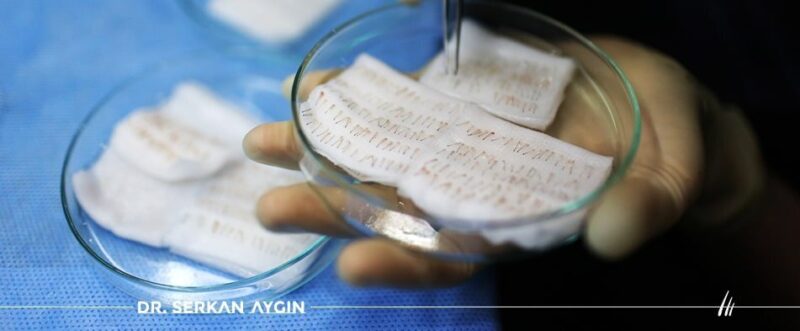
A hair graft is a small piece of scalp tissue that contains 1 to 4 hair follicles. During hair transplantation, these grafts are harvested from the donor area (usually the back and sides of the scalp) and implanted into thinning or bald areas.
Contrary to common belief:
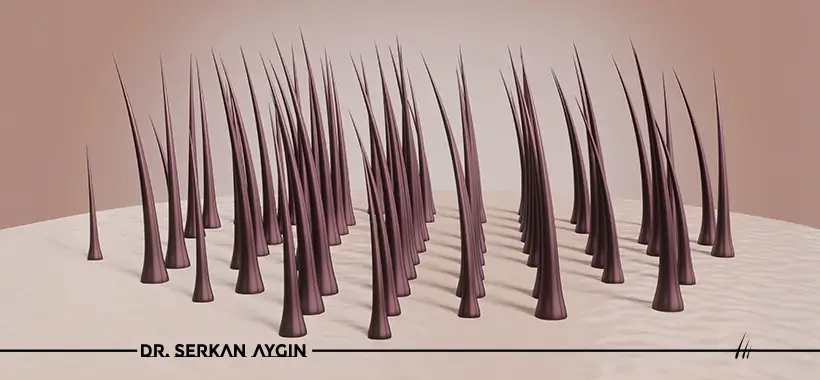
- 1 graft ≠ 1 hair
- Graft composition varies between individuals
- Coverage depends on density, not just graft numbers
The Science Behind Hair Transplantation
Modern hair transplantation is based on the theory of donor dominance, first described in 1952. This principle explains why hair follicles taken from genetically resistant areas can continue growing after transplantation.
However, clinical evidence shows that both donor and recipient characteristics influence results, which is why personalized planning is crucial for natural outcomes.
Factors That Determine How Many Grafts You Need
There is no universal graft number for full hair coverage. Several biological and anatomical factors affect the final calculation:
Ethnicity
Studies show that hair density varies by ethnicity. On average:
- Caucasian individuals tend to have higher hair density
- Individuals of African descent typically have lower follicular density
Age
Hair density naturally decreases over time. While newborns may have over 1,100 follicles/cm², adults often have nearly half that number by their 30s.
Hair Color
Hair color also plays a role:
- Red hair: ~90,000 hairs
- Black hair: ~100,000–110,000 hairs
- Blonde & brown hair: up to ~140,000 hairs
Individual Scalp Characteristics
Scalp size, hair shaft thickness, curl pattern, and contrast between hair and skin all influence perceived density.
Understanding the Hamilton–Norwood Scale
The Hamilton–Norwood Scale is the most widely used system to classify male pattern hair loss. It helps surgeons estimate graft requirements, but it does not replace a medical evaluation.
Approximate Graft Requirements by Norwood Stage
Norwood Stage | Estimated Grafts | Area Covered |
500–800 | Temples | |
1,600–2,400 | Front | |
2,200–3,400 | Front + crown | |
2,600–4,200 | Front + crown | |
3,000–4,600 | Front + crown | |
3,200–5,000+ | Extensive loss |
These numbers are approximate and must be adapted to donor capacity.
How Many Grafts Can Be Safely Extracted?
The donor area is not unlimited.
- Most patients can safely provide 5,000–8,000 grafts over time
- Extraction usually preserves 50–60% donor density
- Overharvesting can cause visible thinning in the donor area
For advanced hair loss, multiple sessions may be required to achieve balanced and natural coverage.
Do More Grafts Mean Better Results?
No.
A higher graft count does not automatically lead to better outcomes.
What truly matters:
- Graft survival rate
- Natural hairline design
- Correct angulation and density distribution
- Long-term hair loss planning
The goal is natural harmony, not maximum numbers.
FAQs
How many grafts do I need for full hair coverage?
Most patients require 4,000–5,000 grafts for front-to-back coverage, but the exact number depends on donor capacity and hair characteristics.
Is 2,500 grafts enough?
2,500 grafts may provide good coverage for the frontal area, but it is usually insufficient for full scalp coverage.
Can all grafts be transplanted in one session?
Depending on the technique and patient condition, 3,000–4,500 grafts can often be transplanted in one session. Larger cases may require multiple sessions.
Does crown coverage require more grafts?
Yes. The crown (vertex) typically requires higher graft density due to its circular growth pattern.
Can online graft calculators be trusted?
They provide rough estimates only. A medical consultation is essential for accurate planning.
Book your free online consultation with the Dr. Serkan Aygin Clinic today and receive a personalized graft estimation and treatment plan prepared by medical professionals.
Final Medical Insight
If you are asking “How many grafts do I need for full hair coverage?”, the correct answer can only be determined after a professional evaluation of your hair loss pattern, donor area, and long-term goals.
Medical & Scientific References
- Orentreich N. Autografts in alopecias and other selected dermatological conditions. Ann N Y Acad Sci. 1959.
- Norwood OT. Male pattern baldness: classification and incidence. South Med J. 1975.
- Loussouarn G et al. Worldwide diversity of hair curliness: a new method of assessment. Int J Dermatol.
- Jimenez F, Ruifernandez JM. Hair transplantation: scientific principles and clinical practice.


