

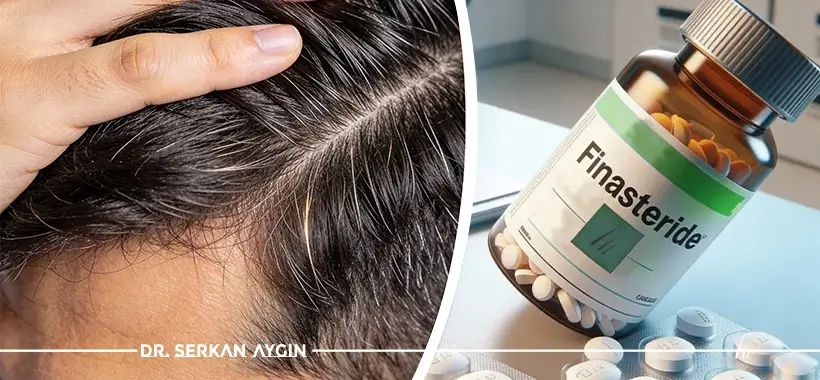
Finasteride after a hair transplant is a standard medical practice designed to protect transplanted grafts, preserve existing hair, and maintain natural-looking density over time. While a hair transplant relocates healthy follicles, it does not stop the hormonal process that causes hair loss. Finasteride plays a critical role in ensuring the long-term success of the procedure.
For this reason, finasteride is routinely prescribed by hair-transplant surgeons and dermatologists as part of a medically supervised post-operative protocol.
Why Finasteride Is Essential After a Hair Transplant
A hair transplant restores hair to thinning or balding areas, but it does not prevent androgenetic alopecia from continuing in untreated zones. Without post-operative medical therapy, native hair surrounding the transplanted grafts may continue to thin over time.
Finasteride acts as long-term protection for your results by targeting the underlying cause of hair loss, helping maintain uniform density and a natural hairline as you age.
How Finasteride Works: The DHT Shield
Finasteride inhibits the enzyme 5-alpha reductase, which converts testosterone into dihydrotestosterone (DHT). DHT is the primary hormone responsible for follicle miniaturization and progressive hair thinning.
By lowering DHT levels, finasteride:
- Strengthens vulnerable, low-functioning hair follicles
- Helps preserve hair density in both donor and recipient areas
- Reduces the severity and duration of post-operative shock loss by stabilizing surrounding native hair

When Should You Start Finasteride After a Hair Transplant?
Most surgeons recommend starting oral finasteride immediately or within the first few days after surgery, as it does not interfere with wound healing. Early use helps stabilize native hair during the shedding phase and supports long-term graft integration.
Topical finasteride is usually introduced 3–4 weeks post-operation, once the scalp has fully healed, to avoid irritation of newly implanted grafts.
Oral vs. Topical Finasteride
Patients generally choose between two forms of treatment:
- Oral finasteride (1 mg daily):
The most widely studied and prescribed option. It provides consistent systemic DHT suppression and can be started immediately after surgery. - Topical finasteride:
Often preferred by patients seeking lower systemic exposure. It is typically introduced after the scalp has healed and may present a reduced risk of systemic side effects.
Both forms can be effective when used consistently and under medical supervision.
Maximizing Graft Survival and Donor Area Health
Recent clinical data (2024–2025) suggests that finasteride improves the overall scalp environment by reducing DHT-related inflammation. This supports stronger graft anchoring and higher survival rates.
Equally important, finasteride protects the donor area (back and sides of the scalp). Maintaining donor density is critical if a secondary procedure or touch-up session is required in the future.
Understanding Potential Side Effects
While finasteride is safe for the majority of users, it is important to be aware of potential side effects. Clinical data suggests that a small percentage of men (approximately 2%) may experience sexual side effects, such as a decrease in libido, erectile dysfunction, or a reduction in semen volume. In most cases, these symptoms are temporary and resolve as the body adjusts to the medication or shortly after the treatment is discontinued. For those concerned about systemic absorption, topical finasteride is an excellent alternative that delivers the medication directly to the scalp with a significantly lower risk of side effects.
Preventing the “Island Effect”
One of the most common long-term issues after hair transplantation is the island effect—when transplanted hair remains thick, but native hair behind it continues to recede.
This creates an unnatural separation between the transplanted zone and surrounding hair. Consistent finasteride use helps preserve native hair, ensuring a smooth, natural transition and balanced appearance over time.

Dosage and Cost
- Standard dosage: 1 mg per day
- Higher doses do not increase effectiveness and may increase side-effect risk
- Average monthly cost: $14–$30 for generic finasteride
Finasteride remains one of the most cost-effective long-term strategies for maintaining hair transplant results.


