

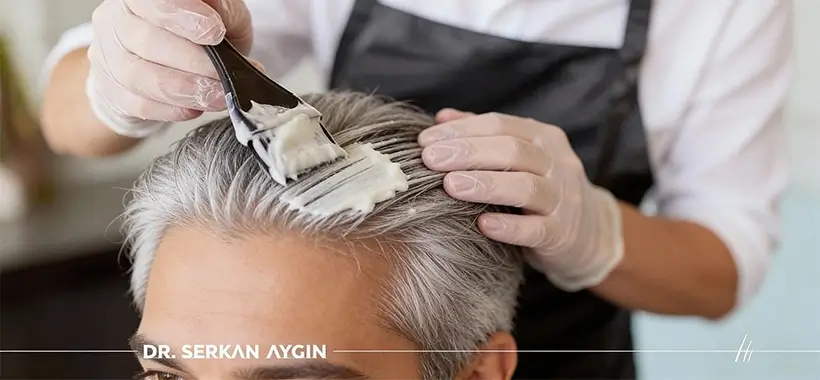
Restoring your hairline through a hair transplant is a life-changing investment, but it often brings up practical questions about long-term maintenance. Many patients wonder if they can return to their usual styling routines, specifically dyeing transplanted hair to cover greys or change their look. While the transplanted follicles are yours, they require a specific recovery window before being exposed to the harsh chemicals found in most commercial dyes.
The scalp undergoes a significant healing process following a Follicular Unit Extraction (FUE) or DHI procedure. During the initial weeks, the newly implanted grafts are establishing their blood supply. Applying hair coloring chemicals too early can lead to scalp irritation or, in worst-case scenarios, damage the follicles themselves. Understanding the biological timeline of recovery is the first step toward ensuring your results remain vibrant and healthy.
Understanding the Biology: Will My Transplanted Hair Turn Gray?
One of the most common misconceptions is that transplanted hair behaves differently than the rest of your hair regarding aging. The truth is rooted in genetics: the hair moved from the donor area (usually the back and sides of the head) retains its original characteristics. This phenomenon, known as donor dominance, means that if the hair at the back of your head is destined to turn gray, the transplanted hair will eventually do the same.
Graying hair occurs when the melanocytes—the cells responsible for producing pigment—slow down their production as we age. Because the follicles relocated during an FUE hair transplant are biologically programmed with your specific DNA, they follow your natural aging clock. If you are already seeing “salt and pepper” strands in your donor zone, those same follicles will continue to produce gray hair in their new location on the hairline or crown.
Genetic Programming of Transplanted Hair Follicles
It is important to remember that a hair transplant does not change the genetic coding of the hair; it simply changes its location. Statistics show that most men begin to notice graying in their 30s or 40s, and this timeline remains consistent regardless of the surgery. The benefit, however, is that resistant hair follicles from the back of the head are also resistant to DHT (dihydrotestosterone), the hormone responsible for male pattern baldness.
While your new hair may eventually lose its pigment, it is much less likely to fall out compared to the original hair in the thinning areas. This ensures that even as you age and transition to a natural gray look, you will maintain the hair density and volume achieved through the procedure. Whether you choose to embrace the gray or cover it with dye, the structural success of the transplant remains intact.

Best Practices for Coloring Your Hair Post-Surgery
Once you have cleared the six-week safety window, you can begin to think about your aesthetic goals. However, the first session after a surgery should be handled with more care than a standard trip to the salon. Your scalp may still be slightly more sensitive than usual, and the newly grown hair can sometimes be thinner or more porous during its initial growth cycle, causing it to absorb pigment differently.
Before committing to a full head of color, it is highly recommended to perform a patch test. Apply a small amount of the dye to a hidden area to ensure there is no delayed inflammatory response. Since hair thickness affects how quickly dye is absorbed, the fine texture of new growth might require a shorter “processing time” to avoid an unnaturally dark or saturated result.
Professional Salons vs. Home Dyeing: Making the Right Choice
While dyeing hair at home is convenient, the stakes are higher after a surgical procedure. A professional colorist understands how to apply product without making heavy contact with the scalp, focusing instead on the hair shafts. This technique, often called “off-scalp coloring,” minimizes the risk of chemical irritation to the follicular units.
If you do choose the DIY route, avoid bleaching powders or high-volume developers for the first few months. These chemicals are designed to aggressively strip pigment and can weaken the hair cuticle, leading to breakage. Instead, opt for semi-permanent or “tone-on-tone” solutions that coat the hair without penetrating the core too harshly, ensuring your transplanted hair health remains a top priority.
How to Protect Your New Follicles from Chemical Damage
Protecting your investment means being selective about the substances you apply to your scalp. Chemical hair dyes work by opening the hair cuticle to deposit pigment, a process that can be stressful for newly transplanted grafts. If the hair is dyed too frequently or with low-quality products, you may experience thinning or brittleness. This is particularly important because the first hairs that grow after a transplant are often finer than the mature hairs that will follow after a year.
To maintain hair health, it is vital to avoid washing your hair immediately before the dyeing process. Natural oils act as a protective barrier for the scalp, reducing the risk of chemical burns or irritation. Additionally, always follow up a coloring session with a moisturizing hair mask or a specialized conditioner. These products help seal the cuticle and restore the moisture balance that chemicals often strip away, keeping your restored hairline looking vibrant and strong.
Choosing the Right Dye: Ammonia-Free and Natural Options
When selecting a product, the ingredient list is your best friend. Traditional dyes rely on ammonia to lift the hair’s pH, but this can be too aggressive for a sensitive post-op scalp. Ammonia-free dyes or vegetable-based alternatives like henna (provided it is pure) are much gentler options. These products reduce the risk of allergic contact dermatitis, which can be particularly uncomfortable and dangerous during the first few months after your surgery.
Many patients opt for organic hair coloring solutions that use natural oils, such as argan or jojoba, to protect the hair during the process. While these might not offer the extreme color shifts of heavy bleaches, they are perfect for covering gray transplanted hair without compromising the integrity of the follicle. Remember, the goal is to enhance your appearance without jeopardizing the long-term growth success of your transplant.
Long-Term Care for Both Pigmented and Gray Transplanted Hair
As the months pass and your transplant matures, the care routine becomes simpler, but consistency remains key. Whether your hair is its original color or has begun the natural graying process, UV protection is essential. Sun exposure can degrade both natural melanin and synthetic dyes, leading to “photo-bleaching” and dryness. Using hair products with UV filters will help maintain the color density and prevent the hair from becoming straw-like.
Furthermore, consider the frequency of your coloring sessions. Experts suggest waiting at least 6 to 8 weeks between full-color applications. If you only need to cover the roots, try a root touch-up technique instead of dyeing the entire length of the hair every time. This targeted approach prevents “over-processing” the ends of the hair, which are the oldest and most prone to damage, ensuring your transplanted density looks consistent from root to tip.
Summary of Post-Transplant Hair Dyeing Guidelines
To help you visualize the safety requirements and biological facts, we have summarized the key points for post-operative hair care and the aging process of your new hair.
Phase / Feature | Recommended Action / Fact | Why It Matters |
0 – 4 Weeks | Strictly avoid all hair dyes and harsh chemicals. | Grafts are still anchoring; scalp is healing. |
4 – 6 Weeks | First coloring possible with surgeon’s approval. | Scalp sensitivity is still higher than normal. |
3 – 6 Months | Opt for ammonia-free or semi-permanent dyes. | Minimizes stress on fine, newly growing hair. |
Graying Process | Will follow the donor area’s genetic clock. | Transplanted hair is biologically identical to donor hair. |
Frequency | Limit full dyeing to every 8 weeks. | Prevents hair breakage and scalp irritation. |


