

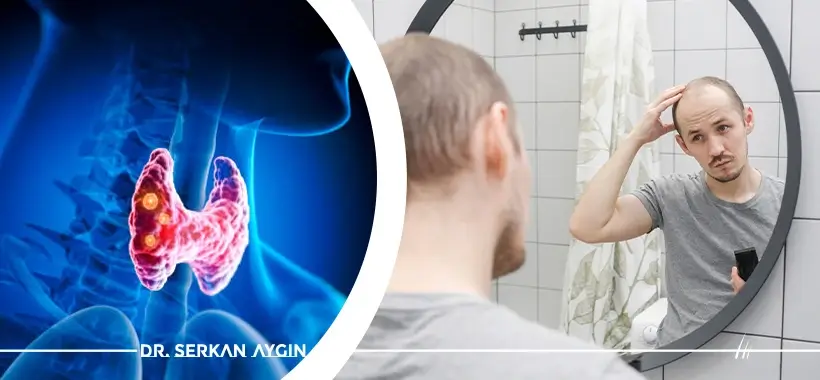
Thyroid imbalances often manifest through subtle physical changes, but few are as distressing as sudden hair thinning or noticeable changes in hair texture. The thyroid gland functions as the body’s internal regulator, controlling metabolism and cellular energy. When this system is disrupted, the hair growth cycle—considered a non-essential process for survival—is often one of the first to be affected. Understanding the specific mechanisms by which thyroid hormones influence the scalp is crucial for anyone noticing a widening part or increased shedding.
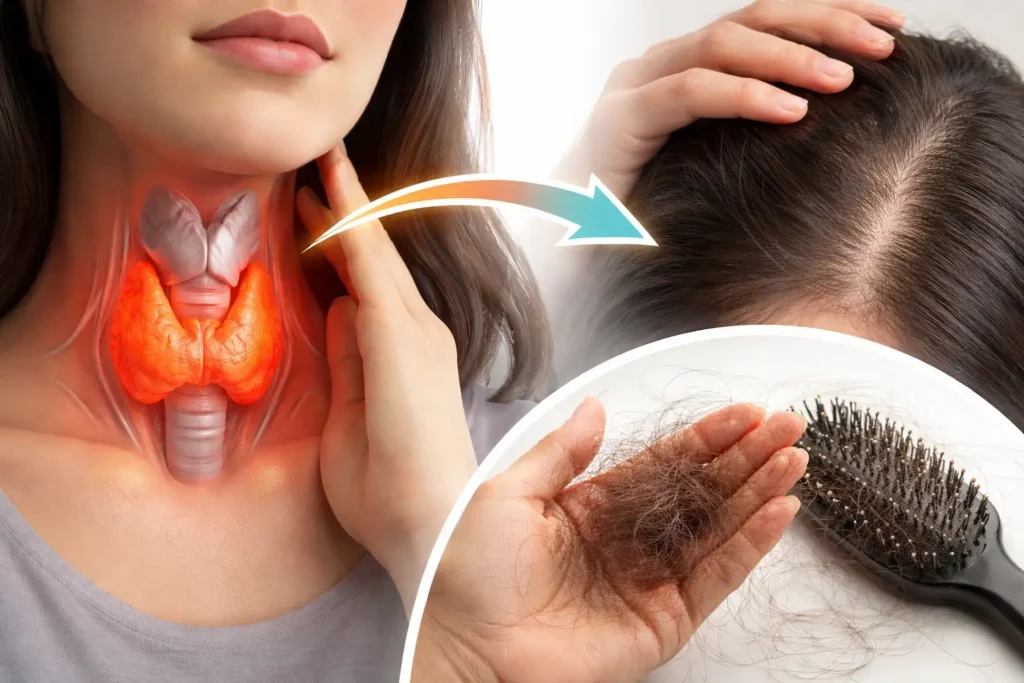
Both hypothyroidism (an underactive thyroid) and hyperthyroidism (an overactive thyroid) can lead to diffuse hair loss across the entire scalp rather than localized bald patches. This occurs because the thyroid hormones T3 and T4 play a direct role in regulating hair follicle activity at the root. When hormone levels become erratic, hair follicles may enter the telogen (resting) phase prematurely, remain there longer than normal, and fail to transition back into the anagen (growth) phase.
The Biological Link Between Thyroid Hormones and Hair Follicles
The human hair follicle is a highly complex mini-organ that relies on a precise balance of biochemical signals to function properly. Thyroid hormones are essential contributors to this process, as they bind to specific receptors within the dermal papilla. When hormone levels are optimal, they stimulate the proliferation of keratinocytes—the cells responsible for producing the hair shaft—allowing hair to grow thicker and at a consistent rate.
When a thyroid disorder develops, this balance is disrupted, often resulting in a condition known as telogen effluvium. In this state, a large percentage of hairs are pushed into dormancy at the same time. As a result, hair does not simply shed; the new hair that should replace it fails to grow, leading to a progressive and noticeable reduction in overall hair density over time.
Chronic thyroid dysfunction can also alter the structural quality of the hair itself. Many patients report that their hair becomes dry, brittle, or unusually fine before visible shedding begins. This occurs because thyroid hormones regulate sebum production and the integrity of the hair cuticle. Without adequate hormonal support, hair loses its elasticity, becomes more prone to breakage, and overall volume appears significantly reduced.
 Identifying Patterns: Hypothyroidism vs. Hyperthyroidism Hair Loss
 Identifying Patterns: Hypothyroidism vs. Hyperthyroidism Hair Loss
Although both conditions affect the scalp, the presentation of thyroid-related hair thinning differs depending on the type of hormonal imbalance.
In hypothyroidism, hair typically becomes coarse, dry, and fragile. One classic clinical sign is thinning of the outer third of the eyebrows, known as the Sign of Hertoghe. Hair loss in hypothyroidism is generally slow and diffuse, reflecting the body’s overall reduced metabolic activity.
In contrast, hyperthyroidism often produces hair that feels unusually soft, fine, and lightweight. Due to the body’s hypermetabolic state, the hair growth cycle accelerates, but the hairs produced are weaker and frequently fail to reach full length. In both cases, the condition is classified as non-scarring alopecia, meaning the hair follicles remain alive and capable of recovery once hormonal balance is restored through appropriate medical treatment.
Statistics: How Common Is Thyroid-Related Alopecia?
Clinical research consistently demonstrates a strong connection between endocrine health and long-term hair vitality. According to the American Association of Clinical Endocrinologists, approximately 12% of the population will develop a thyroid disorder during their lifetime. Studies published in the Journal of Clinical Endocrinology & Metabolism indicate that early diagnosis and treatment can reverse hair shedding in up to 70% of cases, provided hormone levels remain stable for at least six months.
Symptom / Feature | Hypothyroidism | Hyperthyroidism |
Hair Texture | Coarse, dry, brittle | Fine, soft, thin |
Shedding Pattern | Slow, diffuse thinning | Rapid, patchy, or diffuse |
Eyebrow Thinning | Frequent (outer third) | Rare |
Scalp Condition | Often dry or flaky | Usually normal or oily |
Estimated Prevalence | ~33% of clinical cases | ~40–50% of clinical cases |
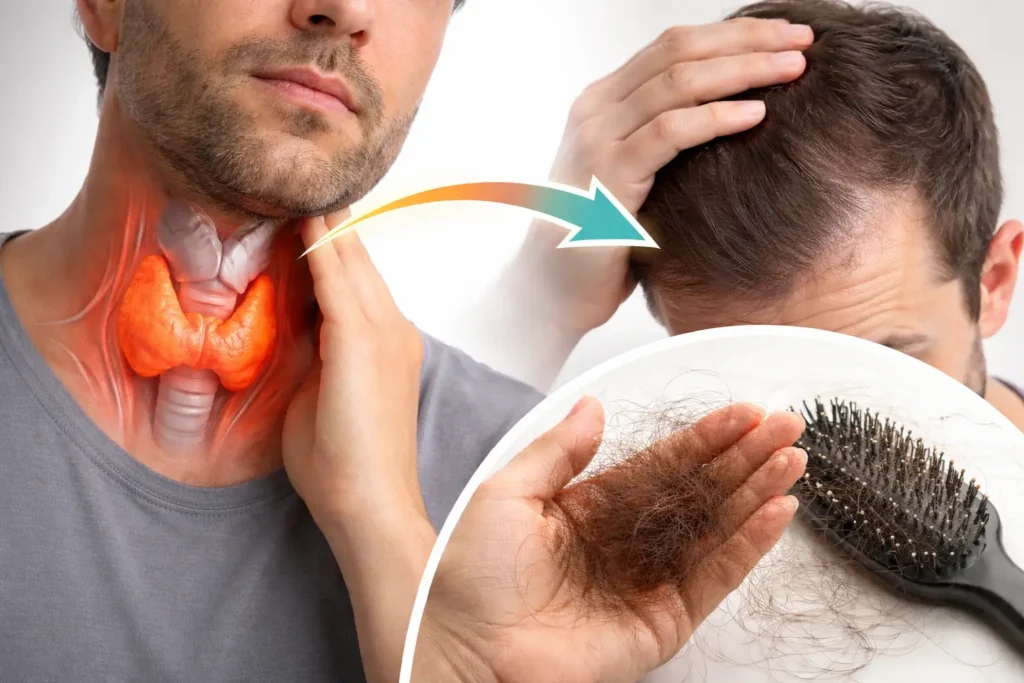
Is a Hair Transplant the Right Solution for Thyroid Patients?
For many individuals, ongoing thinning leads to consideration of permanent restorative options. It has been observed that when thyroid imbalances remain untreated for years, hair follicle density may not fully return to its original state, even after hormonal correction. In such cases, both men and women may consider a hair transplant to restore visible density in affected areas.
However, hormonal stability is essential before undergoing any surgical procedure. While a hair transplant can successfully relocate healthy follicles to thinning regions, long-term success depends on the patient’s systemic health. If the underlying thyroid disorder continues to cause loss of non-transplanted hair, aesthetic outcomes may be compromised.
For this reason, experienced surgeons typically recommend a combined approach: stabilizing thyroid function under medical supervision while using modern FUE techniques to restore density. This strategy ensures that transplanted follicles receive the hormonal support necessary for long-term survival and growth.
Nutritional Strategies to Strengthen New and Existing Hair
Targeted nutritional support plays a crucial role in restoring the hair growth cycle. Iron and ferritin levels are among the most important factors, as iron is essential for both thyroid hormone production and follicular activity. Studies suggest that up to 60% of individuals with thyroid disorders also have low iron stores, which can worsen hair loss and slow the regrowth of newly transplanted grafts.
In addition to iron, biotin (vitamin B7) and zinc contribute significantly to hair shaft strength and keratin synthesis. These nutrients help both native hair and transplanted follicles grow stronger and more resilient. Omega-3 fatty acids may further support scalp health by reducing follicular inflammation, particularly in autoimmune thyroid conditions such as Hashimoto’s disease, creating a more favorable environment for sustainable hair regrowth.