

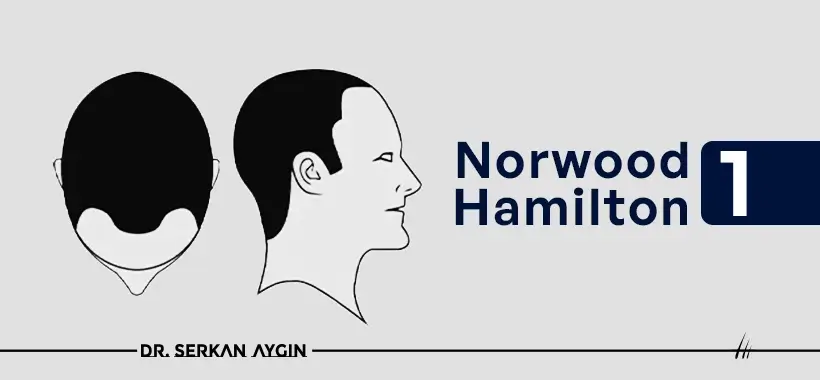
The Norwood-Hamilton Scale is the internationally recognized classification system used to measure male pattern baldness (androgenetic alopecia). It tracks hair loss progression from a full juvenile hairline to advanced baldness.
Understanding where you stand on the Norwood Scale is essential for:
- Early diagnosis
- Hair loss prevention
- Treatment planning
- Long-term hair preservation
If you are at Norwood Scale 1, you are at the earliest possible stage — and this is where strategic prevention makes the biggest difference.
What Is Norwood Scale 1?
Norwood 1 represents a normal, full hairline without visible recession.
At this stage:
- The frontal hairline remains straight or gently curved
- The temples are full
- No M-shape is forming
- Crown density is intact
- No visible thinning or miniaturization
It does not indicate baldness.
Instead, it serves as the baseline reference stage before male pattern hair loss begins.
For many men, Norwood 1 simply reflects a mature hairline that has stabilized after adolescence.
Why Norwood 1 Is More Important Than Most People Think
Many men wait until Norwood 2 or 3 to seek help. By then, miniaturization has already progressed.
At Norwood 1:
- Follicles are still healthy
- DHT damage may not yet be visible
- Preventive treatments are most effective
- Long-term planning can protect density
Hair loss treatment is always more successful when started before visible recession.
How to Identify a Norwood 1 Hairline
Clinical Characteristics of Norwood 1
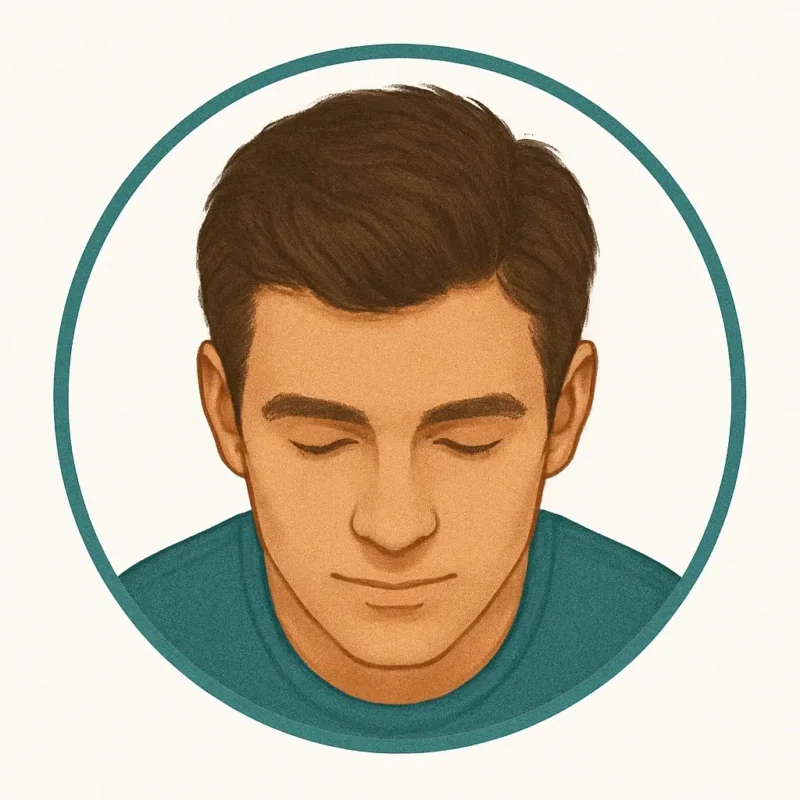
A Norwood 1 hairline shows:
- Uniform frontal density
- No temporal recession
- No thinning at the crown
- Symmetrical hairline contour
- No visible miniaturized hairs
Self-Assessment Checklist
Stand in front of a mirror with strong lighting and ask:
- Does my hairline form a straight or slightly rounded line?
- Are my temples fully filled in?
- Is my density consistent from front to crown?
- Does my hairline look the same as it did 5–10 years ago?
If yes, you are likely Norwood 1.
Important:
A naturally high forehead is not the same as recession. True recession creates a V or M pattern at the temples.
What Causes Progression From Norwood 1?
Genetic Sensitivity to DHT
Male pattern baldness is primarily driven by genetics.
Men who inherit DHT-sensitive follicles gradually experience:
- Follicular miniaturization
- Shortened growth cycles
- Progressive thinning
Even if you are Norwood 1 today, your genetic predisposition determines whether progression will occur.
If your father, grandfather, or uncles experienced hair loss, your risk is higher.
Hormonal and Biological Factors
Hair follicles sensitive to dihydrotestosterone (DHT) shrink over time.
DHT binds to androgen receptors in susceptible follicles, leading to gradual structural weakening.
This process may begin years before visible recession appears.
Lifestyle & Environmental Accelerators
While genetics initiate androgenetic alopecia, these factors may accelerate it:
- Chronic stress
- Smoking
- Poor nutrition
- Vitamin D deficiency
- Iron deficiency
- Poor sleep
- Rapid weight changes
Severe stress can also trigger telogen effluvium, which may reveal underlying genetic hair loss earlier.
Best Treatment Options at Norwood 1
Proactive treatment at this stage focuses on prevention and preservation, not restoration.
Medical Treatments
Minoxidil (Topical)
- Improves blood flow to follicles
- Extends the anagen (growth) phase
- Helps maintain density
Often used if early thinning is suspected.
Finasteride (1 mg daily)
- Reduces DHT levels
- Slows or halts androgenetic alopecia
- Most effective when started early
Clinical studies consistently show strong prevention outcomes when initiated at early stages.
Should You Get a Hair Transplant at Norwood 1?
In most cases: No.
Hair transplantation is generally reserved for Norwood 2 and above.
However, exceptions may include:
- Hairline lowering
- Frontal reshaping
- Cosmetic density enhancement
Advanced techniques like FUE (Follicular Unit Extraction) or Long DHI allow precise graft placement when necessary.
But ethical surgeons prioritize long-term planning and avoid unnecessary graft use in early stages.
Lifestyle Optimization for Hair Preservation
At Norwood 1, long-term scalp health matters.
Recommended strategies:
- High-protein diet
- Iron & zinc optimization
- Vitamin D monitoring
- Omega-3 intake
- Stress management
- Regular scalp hygiene
- Avoid excessive heat or chemical damage
Healthy follicles are more resilient against miniaturization.
When Should You See a Hair Loss Specialist?
Consultation is recommended if:
- You have strong family history
- You notice increased daily shedding
- Your temples appear subtly thinner
- You want preventive medication
- You want a long-term strategic hair plan
At Dr. Serkan Aygin Clinic, we provide:
- Free online hair analysis
- Personalized medical treatment planning
- Long-term hair preservation strategy
- Ethical surgical assessment when appropriate
Early evaluation prevents reactive treatment later.


