

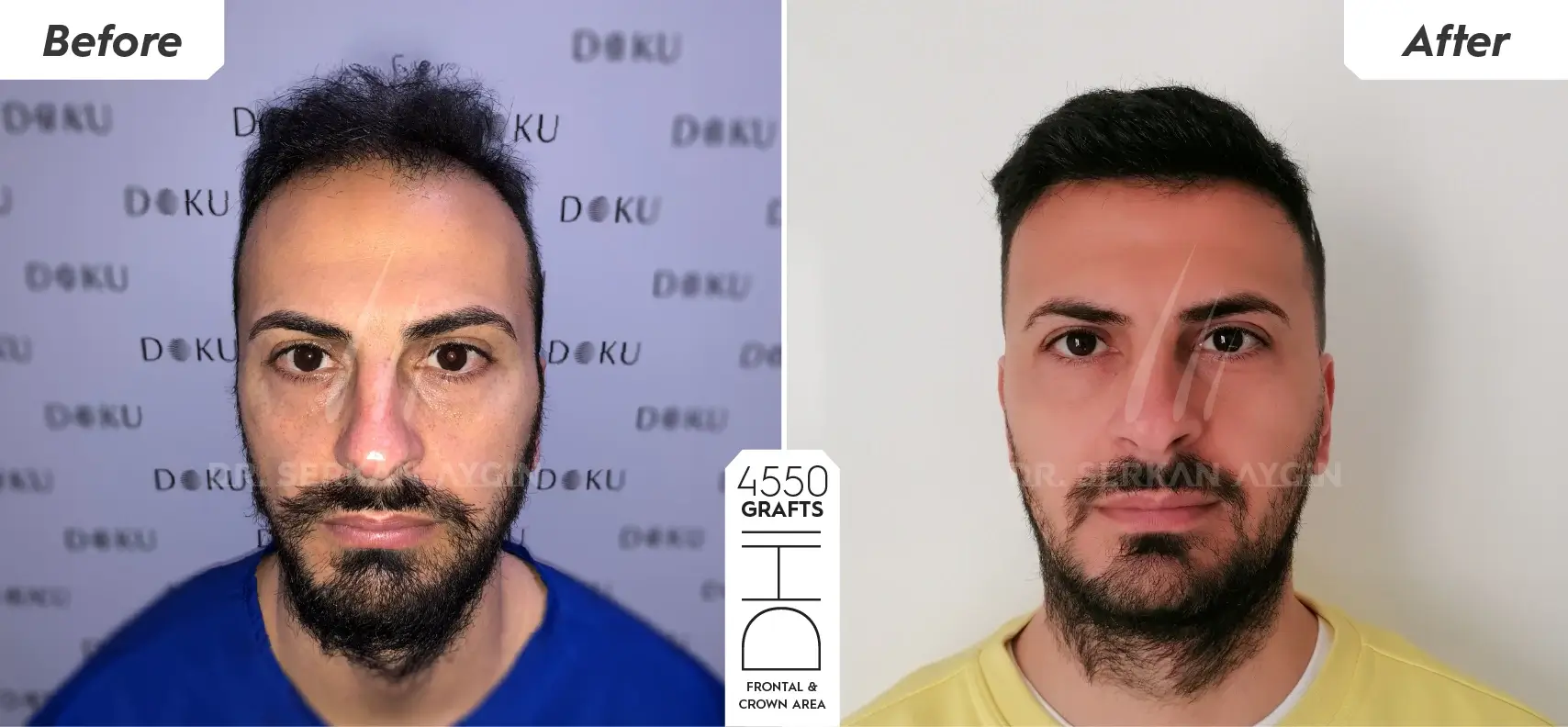
As a healthcare professional from Portugal, Ivan understood the clinical importance of precision and expertise. When he decided to address his hair loss, he meticulously researched the best options for a hair transplant in Turkey, ultimately opting for a 4,550-graft procedure to restore density and redefine his hairline. His journey offers a rare perspective at the intersection of medical knowledge and aesthetic restoration, making this case especially valuable for patients seeking trustworthy before-and-after evidence.
A Medical Professional’s Perspective on Hair Loss
The decision to undergo a hair transplant in Turkey is often driven by the search for world-class surgical techniques and experienced clinical teams. For Ivan, being a nurse meant evaluating the procedure through a lens of patient safety, hygiene protocols, graft survival rates, and surgical planning.
Hair loss, medically known as androgenetic alopecia, affects millions of men worldwide. Clinical studies show that nearly 50% of men experience noticeable hair thinning by the age of 50, making hair restoration one of the most sought-after aesthetic procedures globally.
Understanding scalp vascularity and the fundamentals of follicular unit extraction (FUE) was essential for Ivan. He knew that a successful hair transplant before and after result depends on the surgeon’s ability to harvest healthy follicles while preserving the donor area. By choosing a specialized clinic, he ensured that all 4,550 grafts were extracted, preserved, and implanted following strict medical standards—resulting in a natural transition from the frontal hairline to the crown.
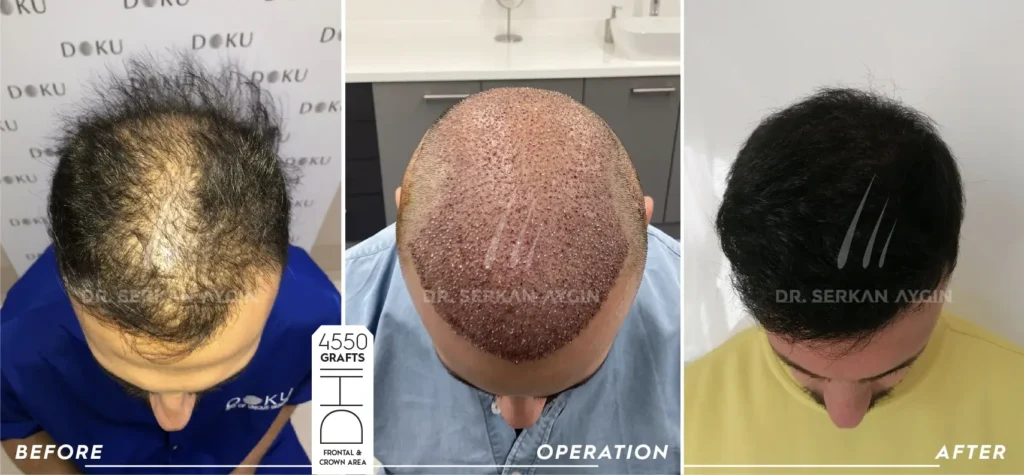
The Clinical Journey: 4,550 Grafts for Maximum Density
Achieving a high-density result requires both experience and precision. The extraction of 4,550 grafts is a time-intensive process that demands hours of meticulous work to ensure the viability of each follicular unit.
In advanced hair transplant Turkish clinics, this graft volume allows surgeons to reconstruct a natural hairline while restoring density across the mid-scalp and crown—the areas that concerned Ivan the most. The transformation visible in hair transplant before and after galleries is not immediate but follows a biological progression.
During implantation, the angle, depth, and direction of each graft are carefully calibrated to replicate natural hair growth patterns. Ivan’s nursing background allowed him to appreciate the sterile surgical environment and the use of sapphire blades, which minimize tissue trauma and promote faster healing compared to traditional steel instruments.
Why Health Professionals Choose Turkey for Hair Restoration
Medical tourism in hair restoration has grown exponentially, positioning Turkey as the global epicenter. Each year, over one million international patients travel to Turkey for medical procedures, attracted by advanced technology, specialized clinics, and highly experienced surgical teams.
For healthcare professionals, the decision often follows the “case-volume principle”: surgeons who perform hair transplants daily achieve a level of technical mastery that is difficult to replicate elsewhere. This expertise enables clinics to safely perform mega-sessions—large graft procedures completed in a single visit—making treatment more efficient for international patients.
High-Density Case Comparison
|
Feature |
Standard Procedure |
Ivan’s Case (High Density) |
|
Graft Count |
2,000 – 3,000 grafts |
4,550 grafts |
|
Target Areas |
Hairline only |
Hairline, mid-scalp, crown |
|
Technique |
Standard FUE |
FUE with Sapphire / DHI |
|
Recovery Time |
7–10 days |
7–10 days with medical-grade care |
Precision Graft Distribution and Surgical Excellence
Distributing 4,550 grafts requires a strategic plan that balances donor preservation with recipient-area density. In Ivan’s case, surgeons reinforced the frontal hairline first, then gradually increased density toward the vertex. This approach ensures results remain natural, age-appropriate, and sustainable over time.
Advanced clinics in Turkey also use nutrient-rich, temperature-controlled storage solutions to preserve follicle viability while grafts remain outside the body. For a medical professional like Ivan, knowing that every step followed evidence-based protocols provided the confidence needed to undergo such a transformative procedure.
Post-Op Recovery: A Nurse’s Protocol for Success
From a clinical standpoint, surgery is only half the journey. The success of a hair transplant before and after result depends heavily on the first ten days post-operation, often referred to as the “golden window.”
Ivan followed a strict recovery protocol, ensuring the 4,550 grafts remained hydrated and protected from trauma and direct sunlight during early vascularization. He adhered to professional washing techniques, saline sprays, and prescribed shampoos to prevent infection and manage scab formation.
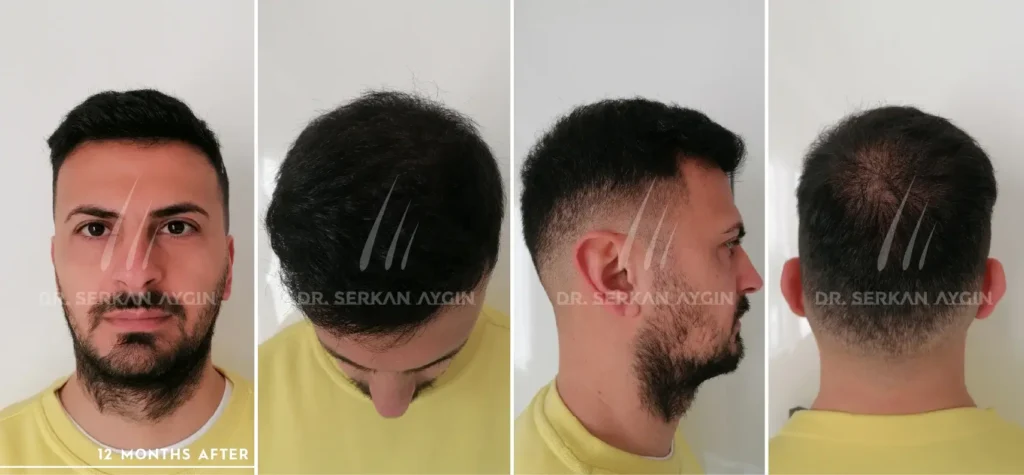
Around the third month, Ivan experienced shock loss, a normal physiological response in which transplanted hairs shed before entering a new growth cycle. Thanks to his medical background, he understood that final results from a hair transplant in Turkey typically emerge between 12 and 18 months.
Long-Term Maintenance and Scalp Health
After healing, long-term success depends on maintaining both transplanted and native hair. Ivan incorporated medical-grade supplements and topical treatments into his routine to support follicular health and scalp circulation.
A hair transplant in Turkey provides the foundation, but lasting results are a partnership between surgical expertise and patient commitment. Observing Ivan’s hair transplant before and after evolution highlights the power of modern restorative medicine—where restored hair density often leads to a profound boost in confidence and overall well-being.


