

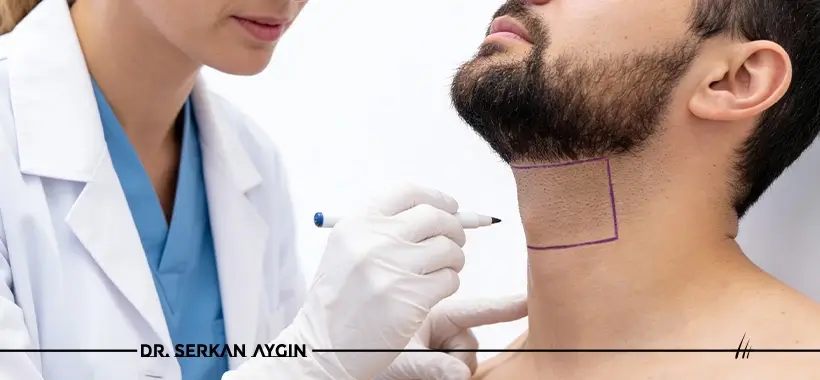
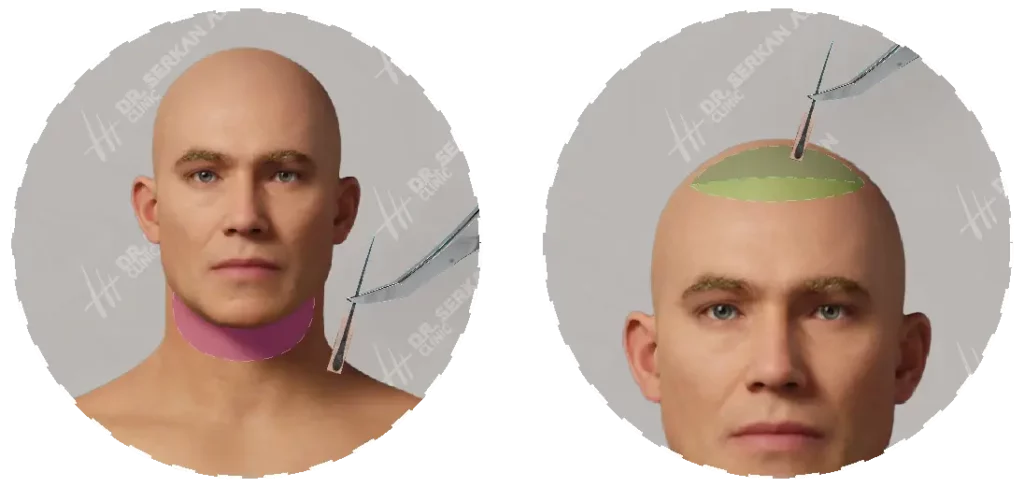
Can Beard Hair Be Transplanted to the Scalp?
Yes. Beard to scalp hair transplant is a well-established and effective technique, particularly for men with advanced baldness or limited scalp donor reserves.
Beard hair follicles are thicker, stronger, and more resistant to hair loss. When transplanted correctly—especially using advanced techniques like DHI (Direct Hair Implantation)—they integrate successfully into the scalp and continue to grow permanently.
At Dr. Serkan Aygın Clinic, beard grafts are primarily used to increase density, not to recreate the frontal hairline.
Is It Possible to Perform a Hair Transplant Using Only Beard Hair?
Technically, beard hair can grow on the scalp; however, it differs in texture and thickness from scalp hair. For this reason, using only beard hair for a full scalp restoration is not recommended, as it may lead to an unnatural appearance.
Instead:
- Beard grafts are ideal for density enhancement
- Best suited for mid-scalp and central zones
- Scalp grafts should always be prioritized for the frontal hairline and crown
How Is Beard to Scalp Hair Transplant Performed?
Beard hair transplantation is a minimally invasive procedure performed using the DHI technique, which allows precise implantation without creating incisions.
Procedure overview:
- Grafts are extracted using micro-punch or micro-motor tools
- Donor areas include the under-chin, jawline, neck, and cheek zones
- Grafts are implanted between existing scalp hairs to increase density
- No visible scarring when performed correctly
Where Is the Donor Area in Beard Hair Transplant?
Common beard donor areas include:
- Under the chin
- Lower jawline
- Neck region
- Upper cheek area
In some cases, body hair from the chest or nape may be considered, but beard hair remains the most reliable alternative donor source after the scalp.
Who Is Eligible for Beard to Scalp Hair Transplant in Turkey?
You may be a good candidate if:
- You experience advanced or diffuse hair loss
- Your scalp donor area is insufficient
- You are over 24 years old
- You are in good general health
- You have a dense and healthy beard area
This method is especially beneficial for patients with severe androgenetic alopecia or previous hair transplant procedures.
Why Is Beard Hair an Ideal Alternative Donor?
Beard hair offers several biological advantages:
- Approximately 2× thicker than scalp hair
- Covers more surface area with fewer grafts
- Strong resistance to hair loss
- Longer growth (anagen) phase
- Similar growth cycle to scalp hair
For example, 1,000 beard grafts can visually match the density of 2,000 scalp hairs, making it a powerful density-boosting tool.
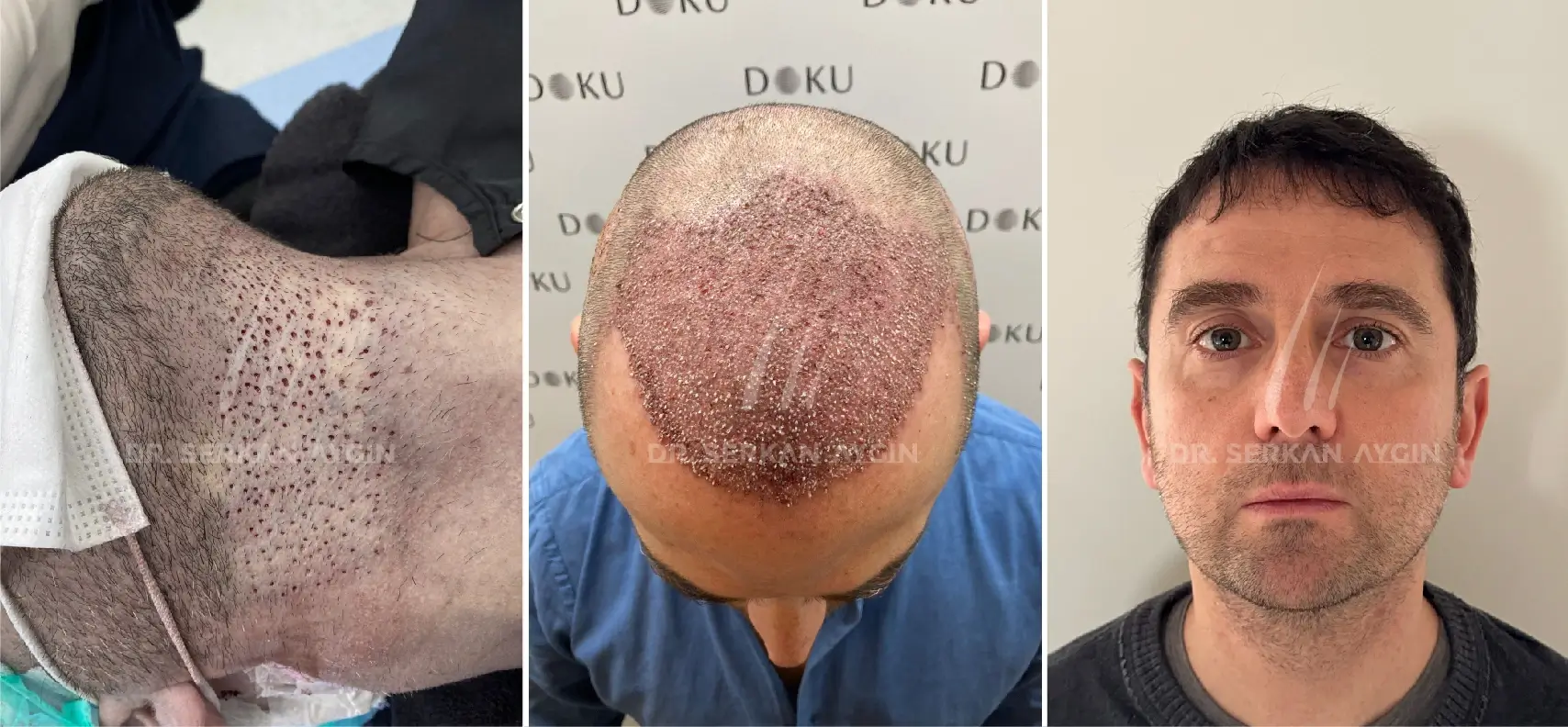
Advantages of Beard to Scalp Hair Transplant
- Significantly increases hair density
- Ideal for patients with thin or depleted scalp donors
- Faster healing due to shallow follicle depth (≈2 mm)
- Beard grafts are more durable and long-lasting
- Minimal post-operative care required in donor area
- High survival rate when implanted correctly
Beard hair is not recommended for frontal hairline creation, as its thickness may compromise natural appearance.
Healing Process After Beard Hair Transplant
Healing in the beard donor area is generally fast:
- Mild redness may occur (especially in fair skin)
- Small extraction marks fade within 7–10 days
- No visible scarring when grafts are harvested evenly
Because beard follicles are shallower than scalp follicles, the procedure causes less trauma and faster recovery.
Are There Any Risks or Scars?
Any medical procedure carries minor risks, but when performed by experienced specialists:
- Scarring is minimal to nonexistent
- Homogeneous extraction prevents patchy appearance
- Even in darker skin types, risks are manageable with conservative harvesting
Beard to Scalp Hair Transplant Cost in Turkey
The cost depends on:
- Number of grafts required
- Degree of hair loss
- Technique used (DHI, Sapphire FUE, etc.)
- Overall treatment plan
Beard grafts are typically included as part of a customized hair transplant package rather than priced separately.


