


Understanding the relationship between alcohol consumption and surgical success is essential for anyone undergoing hair restoration. Alcohol can significantly interfere with the body’s healing mechanisms, blood clotting ability, and the survival of newly implanted grafts. To achieve optimal results, following a strict alcohol-free timeline is not a casual recommendation—it is a medical necessity.
The success of your procedure depends on your body’s ability to repair tissue and integrate transplanted follicles. Alcohol functions as a systemic toxin, diverting metabolic resources away from the scalp at the exact moment when cellular regeneration and vascular support are most critical.

The Biological Link Between Alcohol Consumption and Hair Restoration
When considering a Hair Transplant Turkey has many patients focussing primarily on the surgical technique, yet the physiological condition of the scalp is equally decisive. Alcohol acts as a systemic vasodilator, meaning it widens blood vessels. In a post-surgical context, this can increase swelling, bleeding, and the risk of graft displacement.
Medical studies show that ethanol consumption can interfere with how the body metabolizes anesthetic agents used during the procedure. In addition, the success of a Hair Transplant relies on a stable micro-circulatory blood supply. Alcohol disrupts this delicate balance, potentially depriving newly implanted follicles of the oxygen and nutrients they require—particularly during the first 72 hours after surgery.
Pre-Operative Precautions: Why You Must Stop Drinking Before Surgery
Proper preparation directly influences both safety and final outcomes, as well as the long-term value of your Hair Transplant Cost. Most surgeons strongly recommend complete alcohol cessation at least 7 days before the procedure. This guideline is essential to normalize blood viscosity, clotting factors, and anesthesia effectiveness.
Alcohol consumption prior to surgery increases the risk of excessive bleeding during both the extraction and implantation phases. This can compromise surgical precision and negatively affect graft density. When you invest in a Hair Transplant, you are investing in a permanent result—and protecting that investment begins well before the operation day.
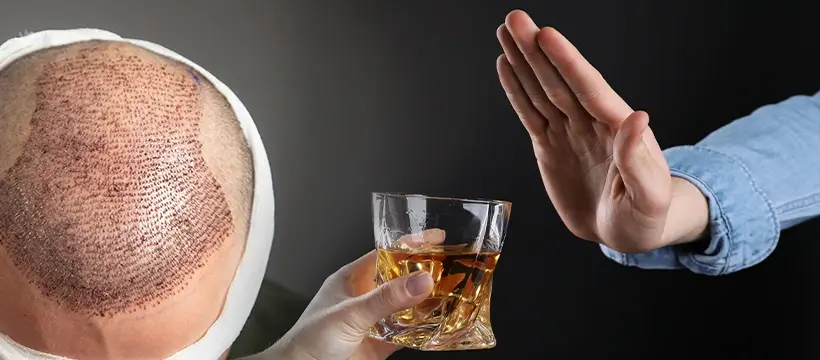
Post-Operative Risks: How Alcohol Threatens Newly Implanted Follicles
The post-operative recovery phase—especially with advanced techniques such as DHI—requires a stable and sterile scalp environment. Alcohol weakens immune response, increasing susceptibility to infection at the micro-incision sites. Even a mild infection can negatively impact graft survival during the early healing window.
Additionally, alcohol-induced dehydration reduces skin elasticity and alters scalp tension. Because DHI depends on precise graft placement at specific angles and depths, changes in scalp hydration can interfere with how securely grafts remain anchored during the first few days. Avoiding alcohol allows the body to focus entirely on healing and follicular integration without chemical interference.
Crucial Recovery Timeline: When Is It Safe to Drink Alcohol?
The most critical period for graft survival is the first 10–14 days following surgery. During this time, follicular units establish a permanent blood supply through revascularization. Most medical professionals advise waiting at least two weeks before reintroducing alcohol to ensure optimal graft stability.
Time Period | Alcohol Recommendation | Impact on Recovery |
7 days pre-op | Absolute abstinence | Optimizes clotting and anesthesia safety |
0–72 hours post-op | Absolute abstinence | Prevents bleeding and graft displacement |
Days 4–14 post-op | Strongly discouraged | Reduces inflammation and dehydration risk |
14+ days post-op | Moderate intake | Grafts are generally secure |
Alcohol, Blood Thinning, and Post-Surgical Bleeding
When patients review Hair Transplant Before and After results, they often notice clean, well-healed outcomes. Achieving this level of healing requires avoiding alcohol, which acts as a blood thinner and increases the risk of prolonged oozing at both donor and recipient sites.
Delayed clot formation slows scab development and leaves micro-wounds exposed for longer periods, increasing infection risk. Many successful Hair Transplant results are associated with patients who strictly followed post-operative alcohol restrictions during the initial healing phase.
Dehydration and Scalp Health: How Ethanol Slows Healing
Alcohol is a potent diuretic that accelerates fluid loss. Hydration is fundamental for cellular repair, circulation, and nutrient delivery to the scalp. When the body is dehydrated, the scalp becomes dry, tight, and itchy—common triggers for accidental scratching.
Scratching during the first week can physically dislodge grafts before they are securely anchored. By avoiding alcohol and maintaining proper hydration, the scalp remains supple and supportive, creating an ideal environment for strong, healthy hair growth.


