

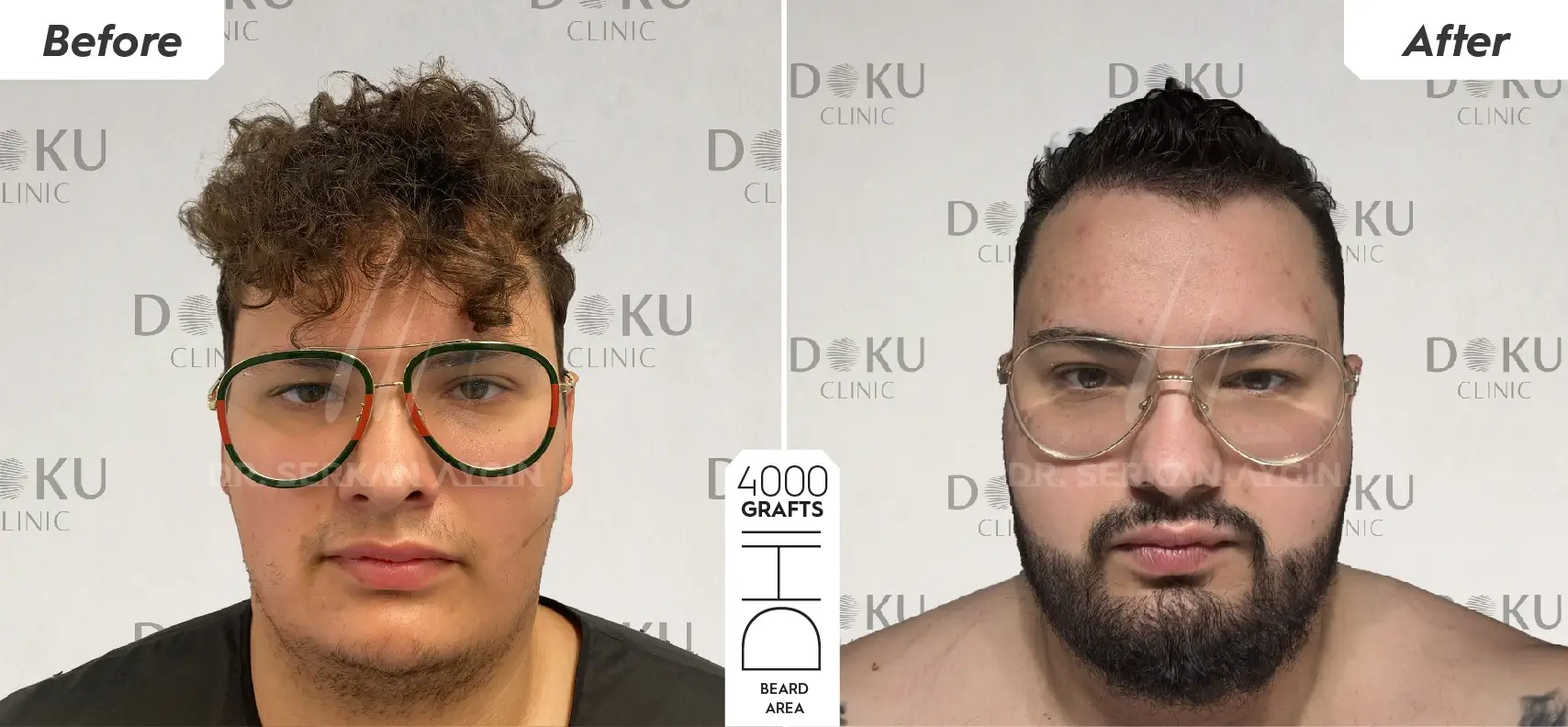
At 28, Adrian, a computer engineer from the United States, faced a common but frustrating issue: a patchy beard that didn’t reflect his confidence or professional image. With his wedding scheduled just one year ahead, he decided it was time for a permanent solution. After extensive research, Adrian chose the Dr. Serkan Aygin Clinic in Istanbul to undergo a high-density beard transplant.
What followed was a carefully planned transformation—from thin, uneven facial hair to a full, dense beard—completed just in time for his wedding day.
A Tech-Driven Decision and a VIP Welcome
Analytical by nature, Adrian spent months reviewing success rates, patient results, and surgical techniques. The clinic’s experience in facial hair transplantation and its precision-focused Sapphire FUE approach stood out.
From the moment he arrived in Istanbul, every detail was handled seamlessly. A private driver welcomed him at the airport and managed all transportation between the hotel and clinic, allowing Adrian to focus solely on his procedure and recovery. Looking back one year later, he describes the experience as one of the best investments he has made—both aesthetically and personally.
Service Phase | Experience Description |
Airport Arrival | Private VIP pickup at the terminal |
Accommodation | 3-night hotel stay in Istanbul |
Transport | All clinic and hotel transfers via private car |
Result (1 Year) | Full, dense beard with a natural jawline |
The Transformation: Step by Step
Beard transplantation demands exceptional precision. Unlike scalp procedures, facial hair must be implanted at very specific angles to ensure a natural appearance.
Before: The Design
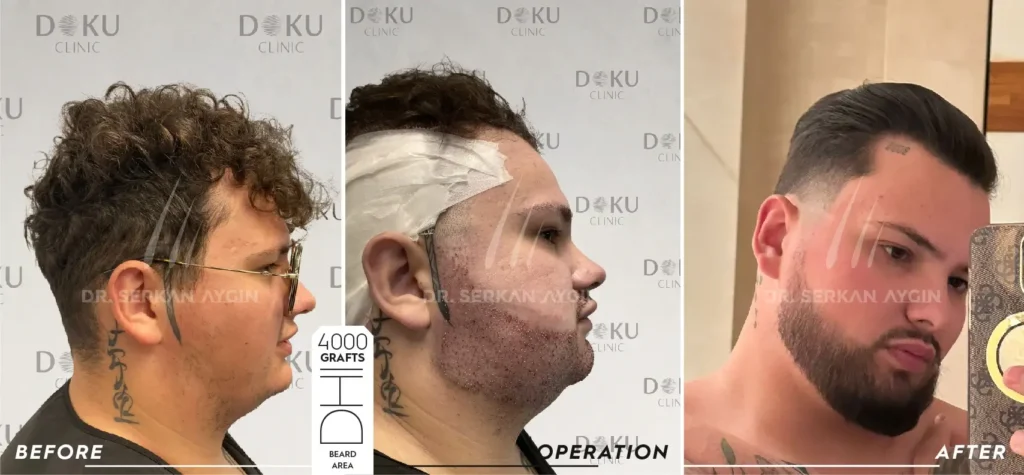
Prior to surgery, Adrian met with Dr. Serkan Aygin to design his beard. The plan focused on filling sparse cheek areas and defining a strong, masculine jawline. A total of 4,000 grafts was determined to achieve uniform density and balance.
During: The Procedure
Under local anesthesia, donor hair was extracted from the back of the scalp. Using Sapphire FUE technology, micro-channels were created with ultra-fine sapphire blades, supporting faster healing and natural growth direction. Each graft was implanted individually with meticulous attention to angle and depth.
Post-Op: The Recovery
Mild redness and micro-scabbing occurred during the first week and resolved quickly by following the clinic’s aftercare protocol. As expected, Adrian experienced a temporary shedding (“shock loss”) phase in the following weeks. New, permanent beard growth began around the third month.
One Year Later: The Final Result
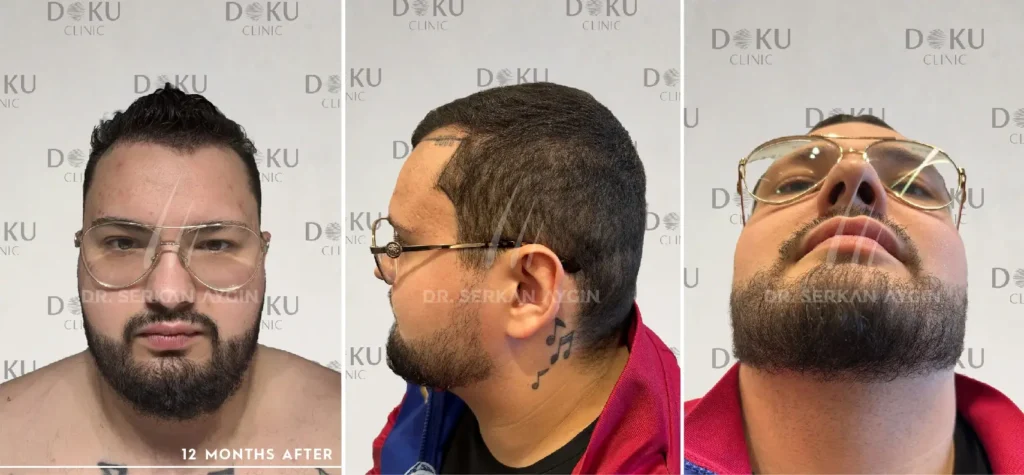
After 12 months, Adrian’s transformation was complete. His beard is now dense, evenly distributed, and blends seamlessly with his natural hair texture. The jawline appears sharp yet natural, and the overall look is fully groomable and permanent. Adrian walked down the aisle with the appearance he had envisioned from the start.


