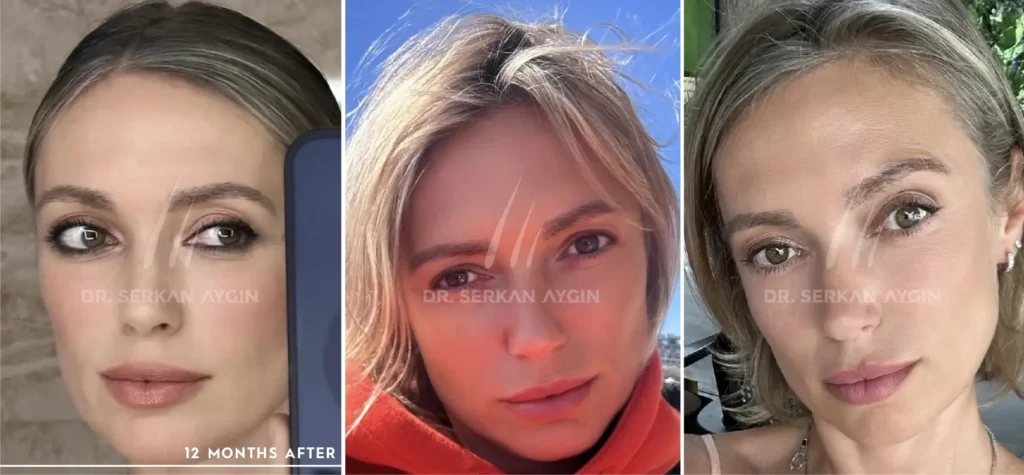


As an international trade broker based in California, my life moves at a fast pace—and in my industry, presentation matters. At 33, I began to notice that my eyebrows, thinned from years of over-plucking, no longer framed my face the way they once had. Even after a full night’s sleep, I looked tired and washed out.
I wasn’t looking for a trend or a temporary fix. I wanted a permanent, natural-looking solution that would still feel appropriate in a high-stakes professional environment. That search led me into the world of medical hair restoration—and ultimately to a 600-graft eyebrow transplant.
After months of research, consultations, and studying real clinical cases, I traveled from California to Istanbul to work with surgeons who specialize exclusively in hair and eyebrow restoration. What followed was a carefully planned medical procedure that genuinely changed how I see myself.
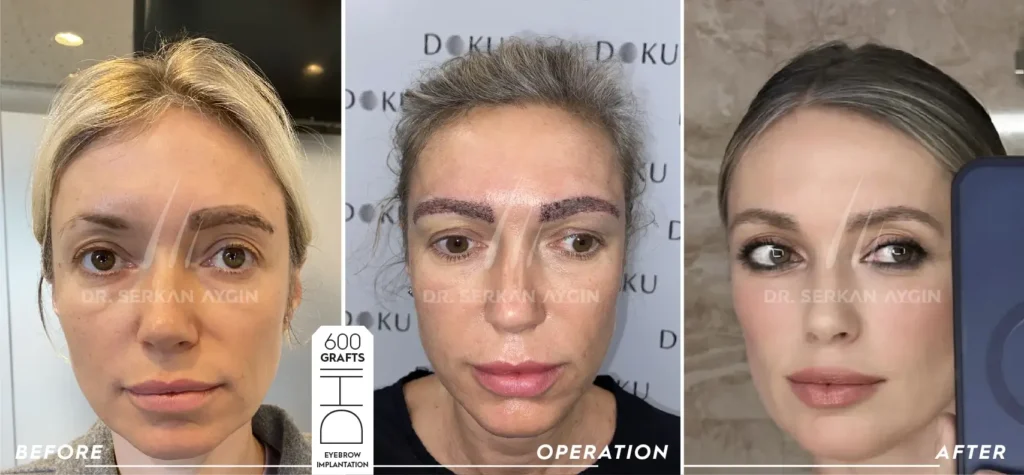
Why 600 Grafts Was the Right Choice
For years, I relied on eyebrow pencils and microblading. While helpful, they were temporary solutions to a permanent problem. My goal was clear: dense, natural arches with no daily maintenance.
Clinical data suggests that for female eyebrow restoration, 250–350 grafts per eyebrow is often the optimal range for achieving high-density yet natural results. By choosing 600 grafts total, the surgeon had enough follicles to precisely recreate the gradual transition of eyebrow density—from the inner brow near the nose to the softer tail.
Understanding realistic eyebrow transplant before and after expectations was the most important part of my preparation. I reviewed dozens of verified cases and quickly learned that density alone doesn’t determine success—implantation angle, direction, and facial symmetry do. A result that looks even slightly “pluggy” would have been unacceptable for me professionally.
Utilizing the DHI Method for the Most Natural Results
The procedure was performed using the DHI (Direct Hair Implantation) technique, which proved to be critical for eyebrow restoration.
Unlike traditional methods, DHI allows follicles to be implanted one by one using a specialized Choi Implanter Pen. This gives the surgeon full 360-degree control over depth, direction, and angle—an absolute necessity when working with eyebrows, where even a few degrees can change the final appearance.
Medical studies show that DHI can achieve graft survival rates exceeding 95%, as follicles spend minimal time outside the body. In my case, nearly every graft transplanted from the donor area at the back of my scalp successfully took root in my brows. This level of precision is what separates an average outcome from a truly natural one.
Evaluating the Cost and Long-Term Value
As someone who analyzes investments for a living, I naturally evaluated this decision through a return-on-investment lens.
In the United States, I was quoted $7,000 to $12,000 for a 600-graft eyebrow transplant. Internationally, the same advanced procedure—performed by highly specialized surgeons—typically ranges between $2,200 and $3,500.
It’s important to understand that an eyebrow transplant is a one-time, permanent solution. Microblading, by contrast, requires touch-ups every 12–18 months, often costing $500 or more per session. Over time, the surgical option becomes not only more effective, but also more economical.
Recent international market analyses (2025–2026) indicate that patients can save up to 70% by choosing reputable clinics abroad—often while receiving care that matches or exceeds domestic standards.
Why I Chose Turkey for My Eyebrow Transplant
Many of my colleagues were surprised that I traveled overseas for a cosmetic procedure. However, Turkey is the global leader in hair restoration for a reason.
Istanbul has become a hub for advanced hair and eyebrow transplantation, with surgeons performing thousands of procedures each year. This high procedural volume leads to a level of refinement and artistic precision that is especially important for delicate areas like eyebrows.
At the Dr. Serkan Aygin Clinic, the experience felt more like a modern medical center than a cosmetic clinic. The team follows international medical protocols comparable to JCI-accredited hospitals, and the all-inclusive structure—VIP transfers, coordinated care, and premium accommodations—made the entire process seamless and stress-free.
My Eyebrow Transplant Before & After Timeline
The transformation was not instant—and understanding the biological growth cycle helped manage expectations.
Immediately after the procedure, my eyebrows appeared very full and sharply defined, with mild redness and tiny pin-sized scabs. These scabs naturally fell off within the first week.
Around week three, I experienced shock loss, where the transplanted hair shafts shed to make room for new growth. This phase can be alarming if you’re unprepared—but it’s completely normal.
By month four, fine new hairs began to emerge. At nearly one year post-op, the density looks balanced, soft, and natural. Because the donor hair comes from the scalp, I trim my brows every 10–14 days—a small trade-off for having real, three-dimensional hair instead of pigment.
Eyebrow Transplant Recovery Timeline
Below is a simplified overview of the typical recovery milestones based on my experience and standard clinical protocols:
Timeframe | Healing Phase | What to Expect | Care Required |
Days 1–3 | Protection Phase | Mild swelling, redness | Head elevation, no touching |
Days 4–10 | Scab Shedding | Scabs dry and fall off | Gentle cleaning, no picking |
Weeks 3–8 | Resting Phase | Shock loss (shedding) | Patience |
Months 3–6 | Early Growth | Fine new hairs appear | Light trimming begins |
Months 9–12 | Full Maturation | Final density achieved | Trimming every 7–14 days |