

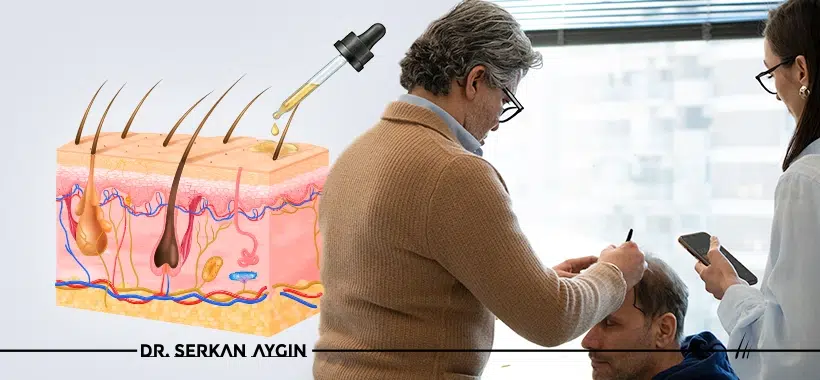
In Part 1 of this series, we explored the revolutionary science behind PP405 (PP-405)—the first drug designed to “switch on” the mitochondria in dormant hair stem cells. But science is only useful if it works in the real world.
As of late 2025, we finally have the answer. Pelage Pharmaceuticals has released data from their Phase 2a clinical trials, and the results are turning heads in the dermatology world. From efficacy rates that beat the placebo to a pristine safety profile, here is everything you need to know about the clinical reality of PP405.
The Numbers: What Happened in the Phase 2a Trials?
Scientific theory is great, but results are better. The Phase 2a trial was a randomized, double-blind, vehicle-controlled study designed to see if the metabolic “hack” actually grew hair on human heads.
The “31% Effect”: Significant Regrowth in Just 8 Weeks
The headline figure from the recent data release (June 2025) is striking. 31% of patients treated with a 0.05% topical PP405 gel saw a greater than 20% increase in hair density after just 8 weeks of daily use.
To put that in perspective:
- PP405 Group: 31% of patients saw significant regrowth (>20% density increase).
- Placebo Group: 0% of patients achieved this result.
What makes this data even more impressive is the speed. Most hair loss drugs, like Minoxidil or Finasteride, require 4 to 6 months of continuous use before any visible change occurs. PP405 is showing statistically significant biological activity in just two months.
“New Hair” in Bald Zones: Why This Matters More Than Density
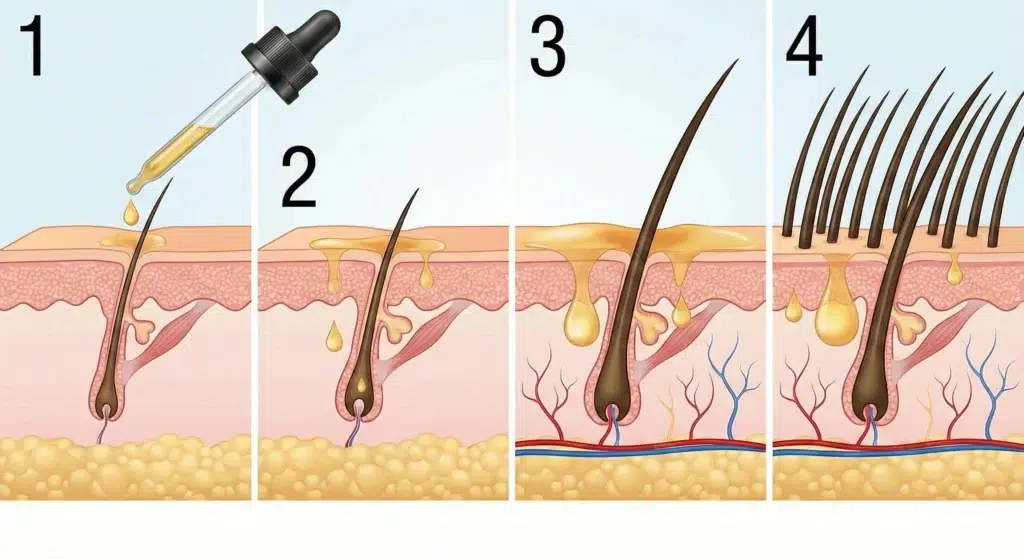
Perhaps the most exciting observation from the trial was where the hair grew. Current drugs are good at thickening miniaturized hairs (making wispy hairs stronger). However, PP405 showed evidence of inducing new hair growth in areas that were previously bald. This suggests the drug successfully woke up stem cells that had been entirely dormant, validating its potential as a true regenerative therapy rather than just a maintenance drug.
Safety Profile: Is It Safe for Your Heart and Hormones?
Whenever a new drug enters the scene, the first question should always be: What are the side effects? Because PP405 targets mitochondria (which exist in every cell in your body), there was a theoretical concern that it might affect other organs if it entered the bloodstream.
Zero Systemic Absorption: The Phase 1 Breakthrough
The Phase 1 and Phase 2a data have put those fears to rest. Blood tests from trial participants confirmed no detectable levels of the drug in the bloodstream.
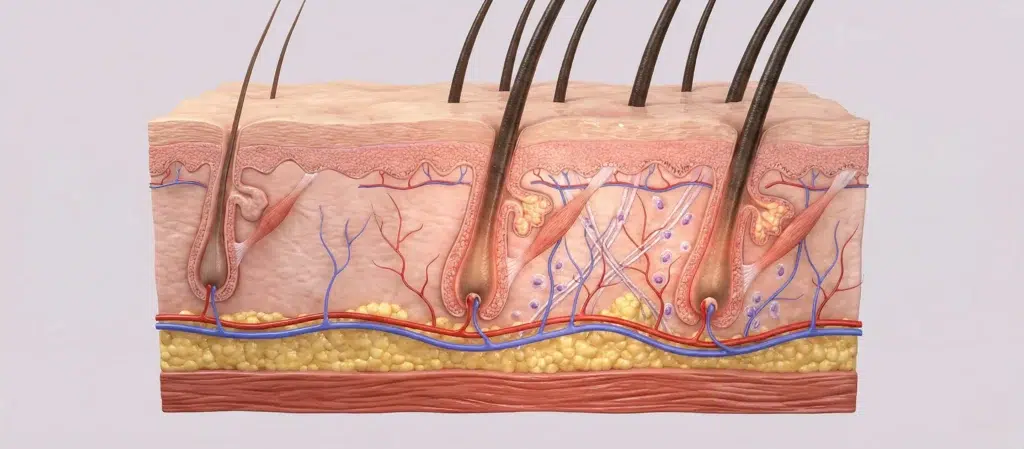
This confirms that PP405 is a “skin-loving” molecule. It penetrates the scalp to reach the follicle but degrades or does not pass into the systemic circulation. This is a massive advantage over oral Finasteride, which circulates through the entire body and can cause systemic side effects like libido loss or brain fog. PP405 appears to stay exactly where you put it.
Local Tolerability: What Happened to the Scalp?
In terms of local side effects (itching, redness, irritation), the drug was reported to be well-tolerated. No serious adverse events were reported in the trials. This suggests that the 0.05% gel formulation is gentle enough for daily application without causing the severe scalp irritation sometimes seen with high-concentration liquid Minoxidil.
The Roadmap: When Can You Actually Buy It?
With successful Phase 2a results, Pelage Pharmaceuticals has secured a massive $168 Million in Series A financing to push the drug across the finish line. But patience is still required.
Phase 2b Trials (Starting Late 2024/2025)
The company has announced that a larger Phase 2b trial is the next immediate step. This trial involves hundreds of patients to refine the dosing and definitively prove efficacy before the massive final Phase 3 trials.
Predicted Market Entry: 2028-2029
If Phase 3 goes smoothly following the current trials, the drug could be submitted for FDA approval by 2027 or 2028. Realistically, this puts the commercial launch date somewhere between 2028 and 2029.
Warning: Avoid the “Grey Market” and Research Chemicals
Because the chemical structure of PP405 has been discussed in patents, some “grey market” labs online are already selling what they claim to be PP405.
Do not buy these products. These are often unverified research chemicals with unknown purity. Without the specific delivery vehicle (the gel formulation) used in the trials, the molecule may not even penetrate your scalp, or worse, it could contain toxic impurities. Wait for the approved, safe version.
Don’t Wait Until 2029: Effective Options Available Today
While the future of hair loss treatment looks bright with PP405, your hair follicles are shedding today. Waiting 4 years for a miracle cure often means losing ground that cannot be recovered.
At the Dr. Serkan Aygin Clinic, we use the most advanced bio-available treatments currently approved to bridge the gap between today’s science and tomorrow’s cures.
If you are looking for a permanent solution now, our clinic is the top choice for a Hair Transplant in Turkey, combining expert surgical care with regenerative support. We utilize Mesotherapy combined with MDBio, a complex of growth factors and peptides. Much like the concept behind PP405, MDBio is designed to deliver potent nutrition directly to the follicle root. While we wait for mitochondrial inhibitors to hit the market, combining a hair transplant with MDBio offers the best protection against androgenetic alopecia available right now.


