
What Is Hair Cloning? A Medical Definition
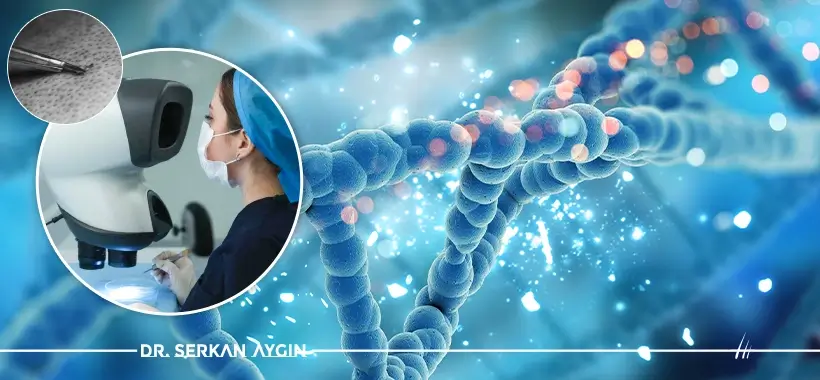
Hair cloning is an experimental regenerative medicine approach aimed at creating new hair follicles by multiplying specific hair-forming cells in laboratory conditions and reintroducing them into the scalp.
Unlike procedures offered by a hair transplant clinic, which redistribute existing follicles, hair cloning seeks to overcome the fundamental limitation of hair transplantation: finite donor hair.
From a scientific standpoint, hair cloning belongs to the broader fields of:
- Regenerative medicine
- Cell therapy
- Tissue engineering
Its ultimate objective is follicular neogenesis—the formation of entirely new, functional hair follicles capable of cycling naturally through anagen, catagen, and telogen phases.
Why Hair Cloning Matters in Hair Loss Treatment
Traditional hair transplant techniques such as FUE and DHI are effective, but they depend on donor availability. Once donor hair is depleted, no surgical method can generate additional follicles.
Hair cloning proposes a paradigm shift:
- One follicle sample could theoretically produce thousands of new follicles
- Severe baldness (Norwood VI–VII) could become treatable
- Body hair harvesting or multiple surgeries may become unnecessary
If clinically successful, hair cloning would redefine expectations for before and after outcomes in hair restoration.
The Biology of a Hair Follicle: Why Cloning Is Difficult
A hair follicle is not a simple structure—it is a mini-organ composed of interacting cell populations:
- Dermal papilla cells (signal hair growth)
- Epithelial matrix cells (form the hair shaft)
- Hair follicle stem cells (regeneration)
- Melanocytes (pigmentation)
- Vascular and neural support structures
For hair cloning to work, these elements must:
- Survive cell extraction
- Multiply without losing function
- Reassemble correctly after implantation
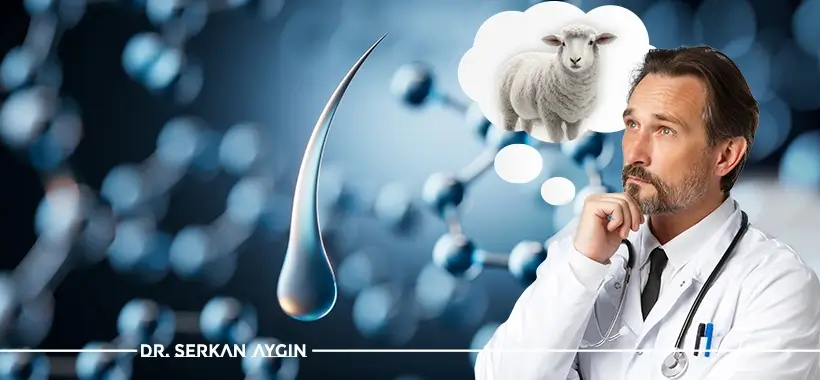
This is why cloning hair is significantly more complex than cloning an organism like Dolly the sheep—embryos self-organize naturally in a womb; hair follicles do not.
The Hair Cloning Procedure: Step-by-Step Medical Overview
Follicular Cell Harvesting
A small biopsy or micro-punch extraction is performed on healthy donor follicles, usually from the occipital scalp.
The primary target is dermal papilla cells, which regulate:
- Hair thickness
- Growth duration
- Follicle activation
This step is minimally invasive and does not resemble a full hair transplant surgery.
Cell Isolation and Laboratory Culturing
Extracted follicular cells are isolated and placed into controlled laboratory environments.
Using:
- Growth factors
- Specialized culture media
- Three-dimensional scaffolds
Scientists attempt to expand cell numbers while preserving trichogenic signaling ability—a major technical challenge, as dermal papilla cells often lose their inductive capacity after repeated divisions.
Cellular Expansion and Quality Control
Cells are multiplied in bioreactors designed to:
- Maintain genetic stability
- Prevent abnormal differentiation
- Avoid tumorigenic behavior
This phase requires rigorous testing for:
- Viability
- Functional signaling
- Immunological safety
Failure at this stage renders the treatment ineffective.
Reimplantation Into the Scalp
Cultured cells are injected into thinning or bald scalp areas using microinjection techniques.
The therapeutic goal is for the implanted cells to:
- Integrate with surrounding tissue
- Recruit epithelial stem cells
- Initiate new follicle formation
At present, consistent follicle formation in humans has not yet been reliably achieved.
Why Hair Cloning Is Still Experimental
Loss of Hair-Inducing Capacity
Dermal papilla cells rapidly lose their ability to signal hair growth when removed from their native environment.
Follicle Assembly Failure
Even when cells survive, they often fail to self-organize into fully functional follicles.
Microenvironment Dependency
Hair follicles require precise:
- Blood supply
- Hormonal signaling
- Immune tolerance
Recreating this microenvironment artificially remains one of the greatest obstacles.
Current Scientific Progress (2026 Status)
- Stemson Therapeutics has successfully generated human hair growth using engineered follicular units in humanized mouse models.
- Aderans Research Institute has completed Phase 2 trials demonstrating safe follicular rejuvenation through cell therapy.
- Academic teams at Yokohama National University have cloned complete mouse hair follicles, advancing follicular organ engineering.
Despite these advances, human clinical approval has not yet been granted.
Hair Cloning vs. Hair Transplant: Clinical Reality
Aspect | Hair Cloning | Hair Transplant |
Generates new follicles | Experimental | No |
Donor dependency | None (theoretical) | Yes |
Clinical approval | No | Yes |
Long-term data | Limited | Extensive |
Predictable before and after results | No | Yes |
Availability | Research phase | Widely available |
As of 2026, hair transplant surgery remains the only treatment with reproducible, permanent outcomes.
Hair Cloning in Turkey and Medical Innovation
Turkey is a global leader in hair restoration medicine, known for combining advanced surgical expertise with cost efficiency.
At Dr. Serkan Aygin Clinic, regenerative medicine is approached with scientific rigor. While hair cloning is not yet clinically available, the medical team actively integrates validated innovations such as:
- Autologous stem cell therapies
- Growth factor–based scalp treatments
- Advanced DHI protocols
This ensures patients benefit from proven science, not experimental promises.
When Will Hair Cloning Become Available?
Most experts estimate:
- Early human trials: 2027–2028
- Limited clinical use: late 2020s
- Widespread availability: early to mid-2030s
Regulatory approval, safety validation, and consistent follicle formation remain the key hurdles.